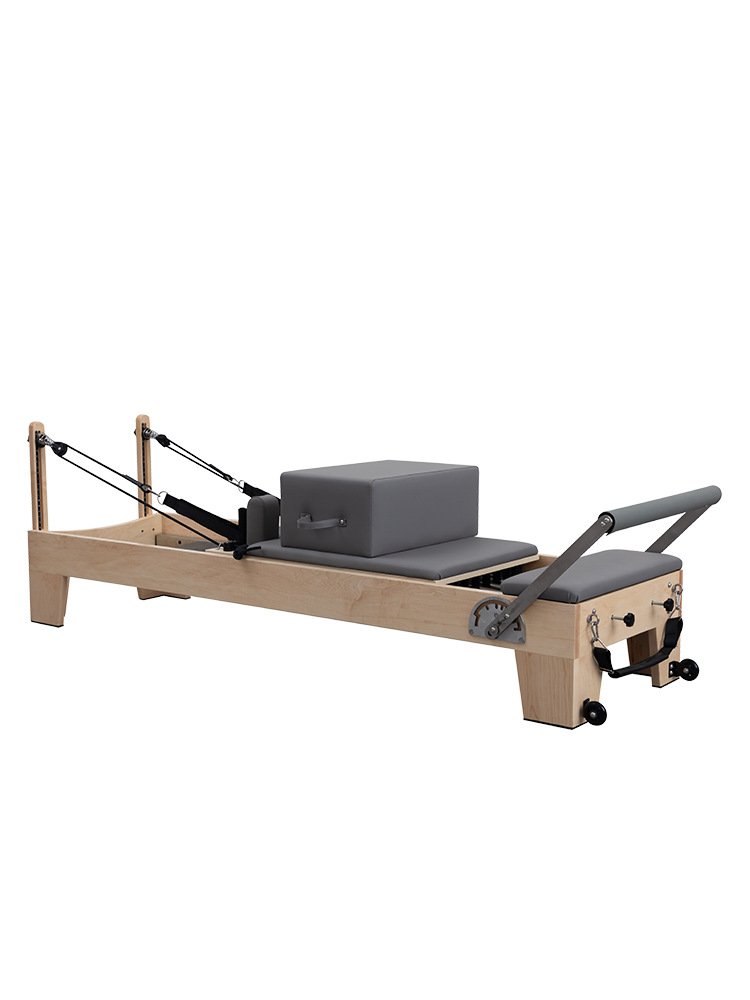
 Reformers105 models
 Reformer + half trapeze33 models
 Cadillac tables18 models
 Pilates chairs27 models

Key takeaways
- 27 of our reformer-family models are full-track versions.
- Full-track is not required for group classes; many studios run standard reformers.
- Designs differ by model — always compare the spec sheet and a video of the carriage travel.
What “full-track” means
On a standard reformer the rails end where the carriage stops. On a full-track reformer the rail system runs along more of the frame, so the carriage can travel further and accessories such as jump boards and platforms can sit in more positions. Manufacturers use the term slightly differently, so ask for drawings.
Comparison
| Standard reformer | Full-track reformer | |
|---|---|---|
| Carriage travel | Standard | Longer |
| Accessory positions | Standard | More |
| Price | Lower | Higher |
| Best for | Group classes, home use | Studios wanting maximum repertoire |
| Weight / crate size | Standard | Often larger |
What to check before ordering
- Carriage travel length and stopper positions
- Compatibility of jump board, sitting box and platform extender
- Rail profile and wheel type
- Crate size — it affects how many fit in a container
FAQ
Do I need full-track for reformer classes?
No. Full-track adds options, but standard reformers cover the core repertoire.
Is a full-track reformer longer?
Often the frame or the rail system is longer. Check the dimensions on each spec sheet.
Related
Have a list or floor plan? Send it to us for model options and next steps.